
Empty Container Management
CropLife SA Product Responsibility Organisation (PRO) · Reg. 19/7/5/P/PRO/20230428/038
Every container that held a pesticide remains the responsibility of the person who used it until it is properly cleaned and handed over to a CropLife SA Certified Recycler. This section explains what an empty container is, how to clean it, what to do with it, what we accept, and what happens next.
In short
It’s this easy
Three steps on the farm. A CropLife SA Certified Collector does the rest.
Rinse three times
Straight after emptying, fill a quarter with water, shake for 30 seconds and pour it into the spray tank. Do it three times.
Drain, dry, puncture
Stand them upside down without caps until dry, then punch two holes so no one can reuse them. Keep them in a locked cage.
Call a collector
A CropLife SA Certified Collector fetches them from your farm, or drop them at your co-op. The recycler gives you a CoDi Intel Declaration Document as proof.
Find a collector near youWhat is considered an empty container?
A pesticide container is considered “empty” only when:
- all the product has been used for its registered purpose, with no free-flowing liquid, powder or granules left inside;
- it has been triple rinsed (or pressure rinsed) immediately after emptying, and the rinse water has been added to the spray tank;
- it has been drained and is dry inside, with no visible residue on the inside, neck, threads or outside; and
- the cap and any foil seal have been removed and rinsed separately.
A container that still holds product, or that has not been rinsed, is NOT an empty container. It is hazardous waste and must be handled as an obsolete pesticide or contaminated packaging (see the Obsolete Pesticides section).
How to clean them
Clean containers right away, while the product is still wet. Dried residue is very hard to remove. Always wear the personal protective equipment (PPE) prescribed on the product label, and rinse at the spray-mixing site so that all rinse water goes into the spray tank. Properly rinsed containers are more than 99.9% free of product residue.
Triple rinsing
- 1 Empty the container into the spray tank and let it drain for 30 seconds after the flow breaks into drops.
- 2 Fill the container about one quarter (25%) full with clean water.
- 3 Replace the cap tightly and shake vigorously for about 30 seconds so the water reaches all inside surfaces, including the handle.
- 4 Pour the rinse water into the spray tank and let it drain for 30 seconds.
- 5 Repeat steps 2 to 4 two more times (three rinses in total).
- 6 Rinse the cap and foil seal separately and add that water to the spray tank as well.
Pressure rinsing (with a nozzle that pierces the base of the container and sprays inside for at least 30 seconds) is an acceptable alternative where the equipment is available.
Rinse water must never be poured on the ground, into drains or into water sources. It belongs in the spray tank, where it is applied to the crop as part of the spray mixture.
Draining and drying
After rinsing, stand the containers upside down with the opening facing down, without caps, on a drip tray or on a rack inside the dedicated container store, so that the remaining water can drain out. Leave them until completely dry inside. Store caps separately in a bag. Wet or dirty containers will be rejected by the recycler.
Puncturing / cutting
Once the container is rinsed and dry, make it unusable so that no one can use it again for water, food, fuel or any other purpose.
- Plastic: puncture or cut the base or side (at least two holes), without damaging the label.
- Metal: puncture the base, then flatten if possible.
- Do not crush or shred plastic containers unless the recycler asks you to.
- Never puncture aerosols or gas cylinders.
What to do with them
- Store rinsed, punctured and dry containers in a lockable, roofed, well-ventilated container store (cage) with an impermeable floor, separate from full product, food, feed and living areas, and away from water sources.
- Sort them: plastic containers, caps, metal, glass, paper/cardboard and foil bags.
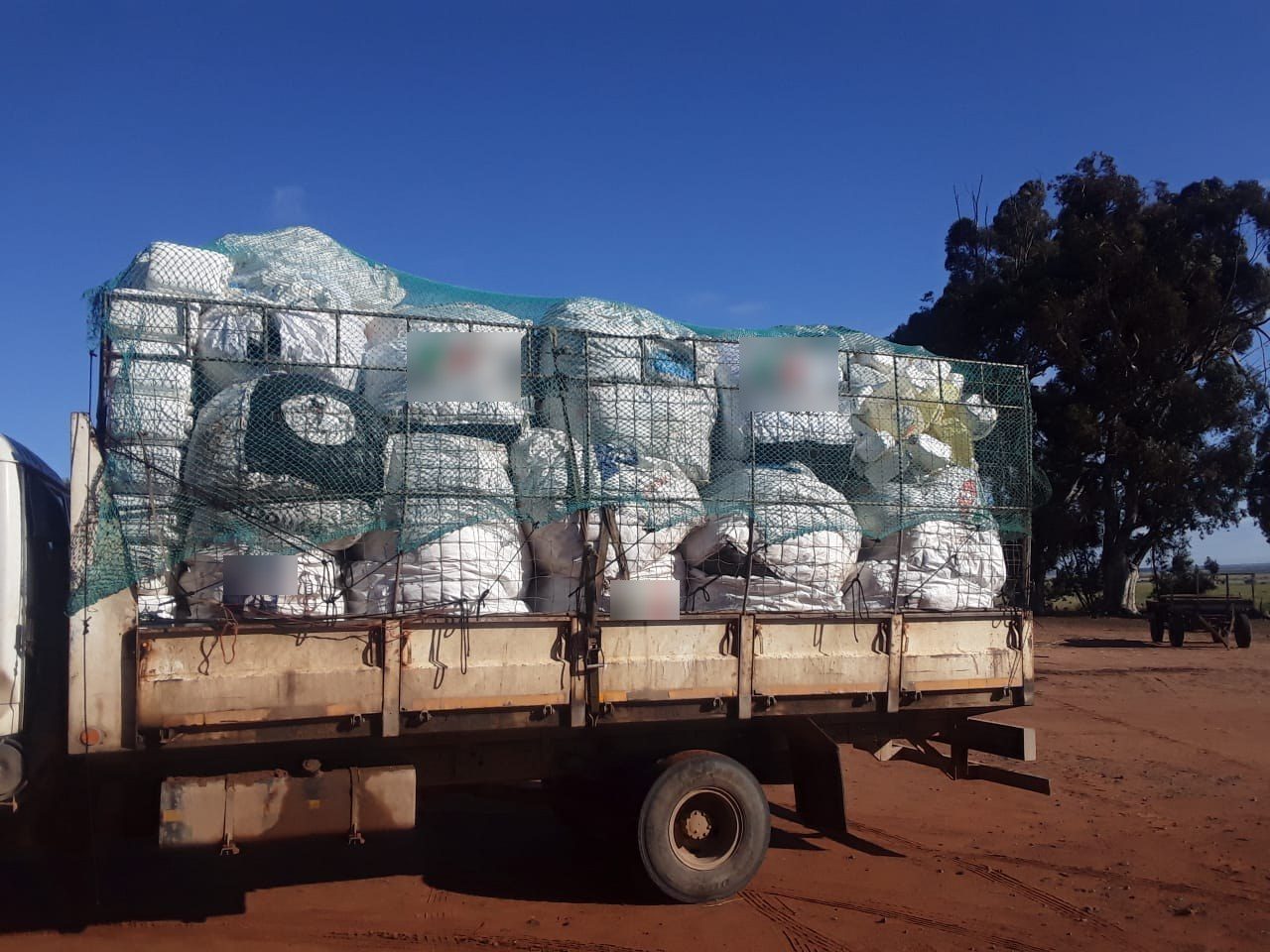
- Take them to, or arrange a collection by, a CropLife SA Certified Recycler or collector in your area. Use the map of certified recyclers to find the nearest one.
- Keep the CoDi Intel Declaration Document the Certified Recycler gives you as proof of correct disposal.
- Many distributors and co-ops offer take-back points. Ask your supplier.
What containers and materials we accept
CropLife SA Certified Recyclers accept the following, provided they are properly cleaned, dry, punctured and sorted.
We accept
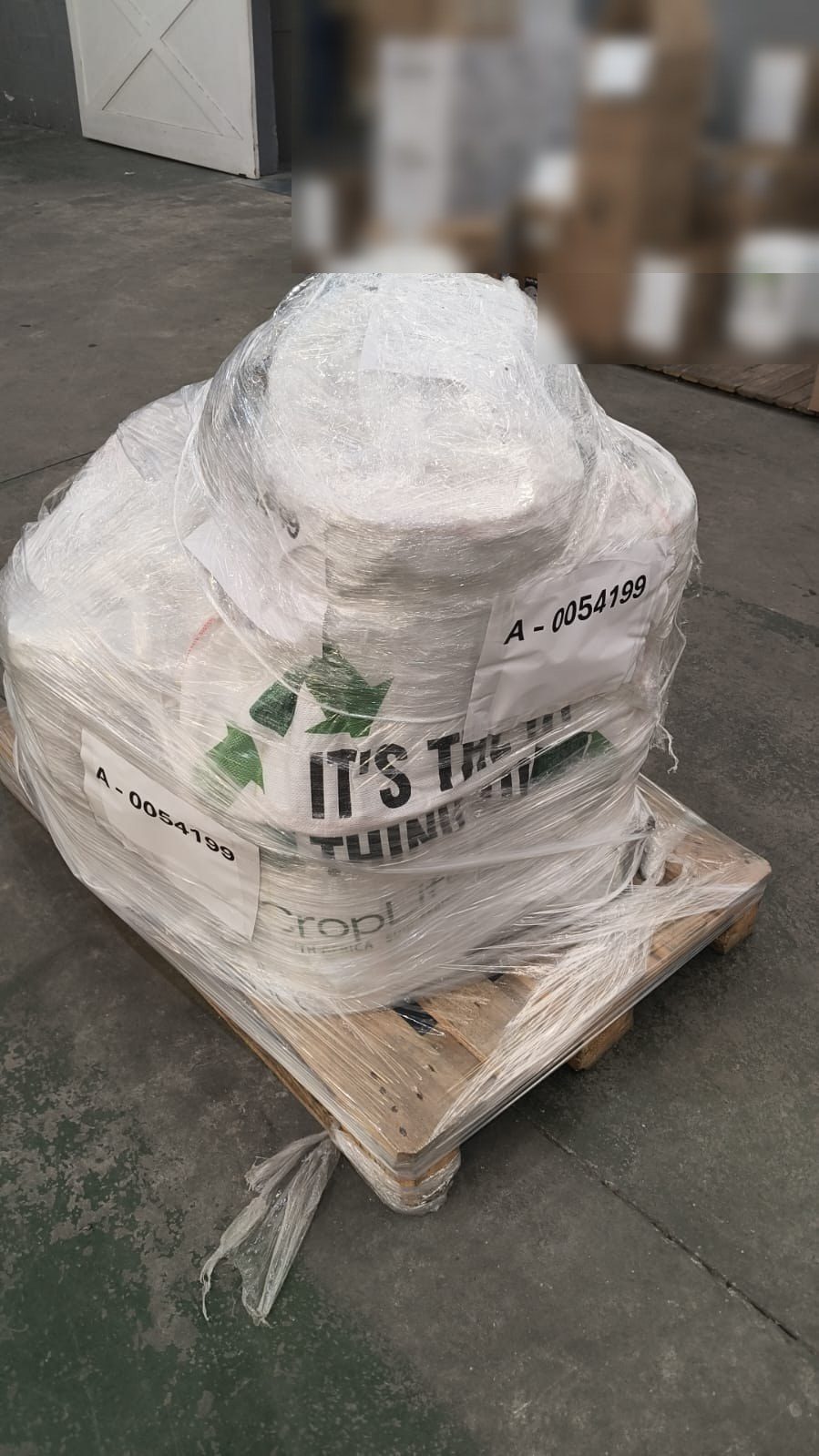
- Rigid plastic pesticide containers (HDPE, PET, co-extruded/multi-layer) of all sizes, caps removed and bagged separately
- Metal (steel and aluminium) containers and drums
- IBCs and large drums, by arrangement
- Triple-rinsed paper, cardboard and woven polypropylene bags and outer cartons, at participating sites
We do not accept
- Containers that still hold product
- Unrinsed or wet containers
- Containers without a label
- Aerosol cans and gas cylinders
- Containers that held products other than pesticides
Non-recyclable packaging (glass, foil sachets, paper sacks with residue) must be disposed of as set out in the CropLife SA disposal guidelines.
Which plastic is it? An information sheet for recyclers
Guidelines for adequate decontamination
Decontamination is what turns a hazardous waste container into recyclable material. The guidelines below set out how each user group must clean the different packaging types before they are handed over.
Agricultural sector and government agencies
Farms, plantations, contractors, co-operatives and government agencies
- Rigid plastic: triple or pressure rinse, drain, dry and puncture.
- Glass and aluminium: triple rinse, drain and dry. Do not break glass at the farm.
- Solid pesticide bags: empty completely into the application equipment. Where the label allows, rinse, then dry and fold.
- Spray tanks: clean inside and out after each use at the spray-mixing site.
- Keep a record of the containers used and handed over.
Professional pest control sector
Registered pest control operators (PCOs) in terms of Act 36 of 1947
- Plastic containers, tubs and buckets: triple rinse, dry, puncture and return to a certified recycler.
- Glass and aluminium: triple rinse, dry and dispose of through a certified recycler or hazardous waste contractor.
- Paper, cardboard and rodenticide packs: empty and return as contaminated packaging. Do not burn.
- Aerosols: use until empty. Do not puncture or incinerate.
- Spent phosphide mats, plates, strips and bait stations: hazardous waste, never recyclable.
- Keep records of disposal and certificates received.
Consumers
Home and garden users
- Buy only the amount you need and use the product completely.
- Plastic bottles: rinse three times and use the rinse water as directed on the label. Leave to dry, close and wrap.
- Aerosol cans: use until completely empty. Never puncture or burn.
- Rodenticide packaging, bait stations and syringes: seal in a bag and take to a garden centre take-back point or municipal hazardous waste drop-off.
- Never reuse containers, and never pour leftovers down the sink or drain.
Non-recyclable packaging
Must still be disposed of legally
- Paper and cardboard sacks, foil or multi-layer sachets: empty, fold or roll and bag. Hand over for thermal treatment.
- Glass: triple rinse and hand over separately. Never break glass on site.
- Damaged, leaking or unrinsed packaging: hazardous waste. Include it in the obsolete pesticide inventory.
- Never burn, bury or dump packaging, or place it in municipal bins.
What farmers must not do with containers
- Reuse pesticide containers for water, food, animal feed, fuel or any other purpose, or give or sell them to anyone else.
- Burn containers in the open (this releases toxic gases, including dioxins).
- Bury containers or dump them in the veld, in rivers or dams, or on a municipal landfill.
- Leave containers lying in the field, at the spray-mixing site or unsecured.
- Pour rinse water or leftovers onto the ground or into drains or water sources.
- Hand containers to informal collectors, scrap dealers or anyone who is not a CropLife SA Certified Recycler or licensed waste contractor.
- Store empty containers together with food, feed, seed or fertiliser.
What happens to the containers after collection
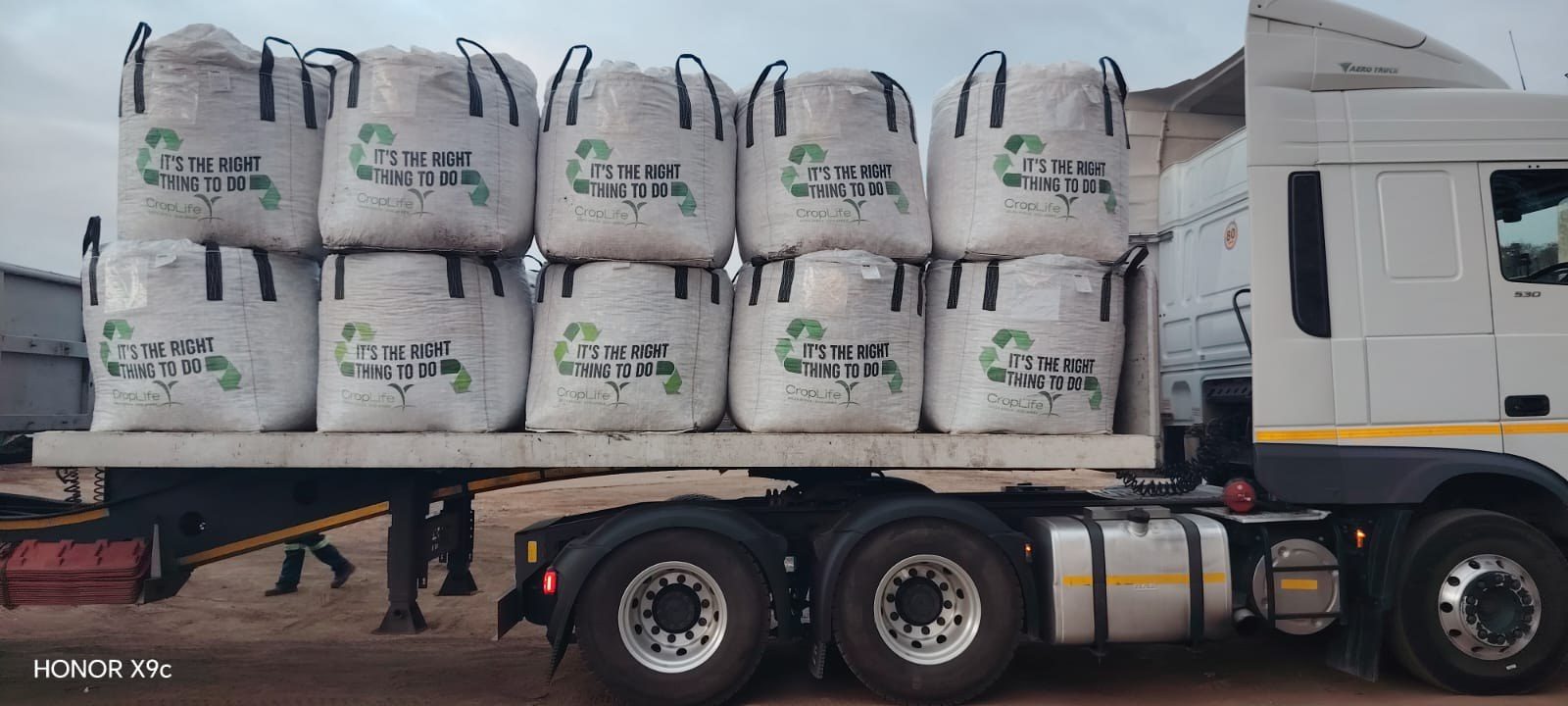
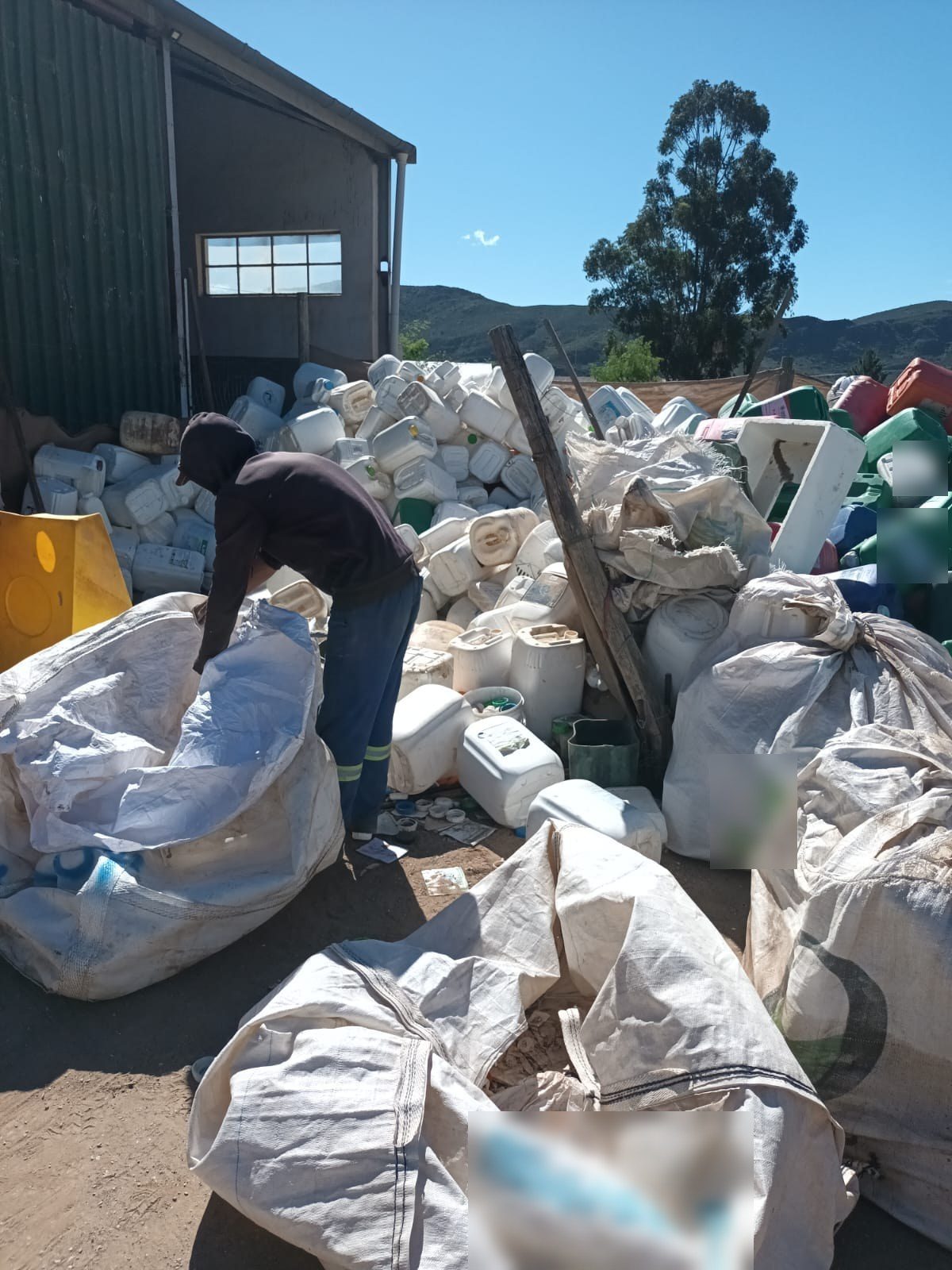
- 1 Inspection. The certified recycler inspects the containers on receipt to confirm they are clean, dry and punctured. Containers that fail inspection are returned or handled as hazardous waste.
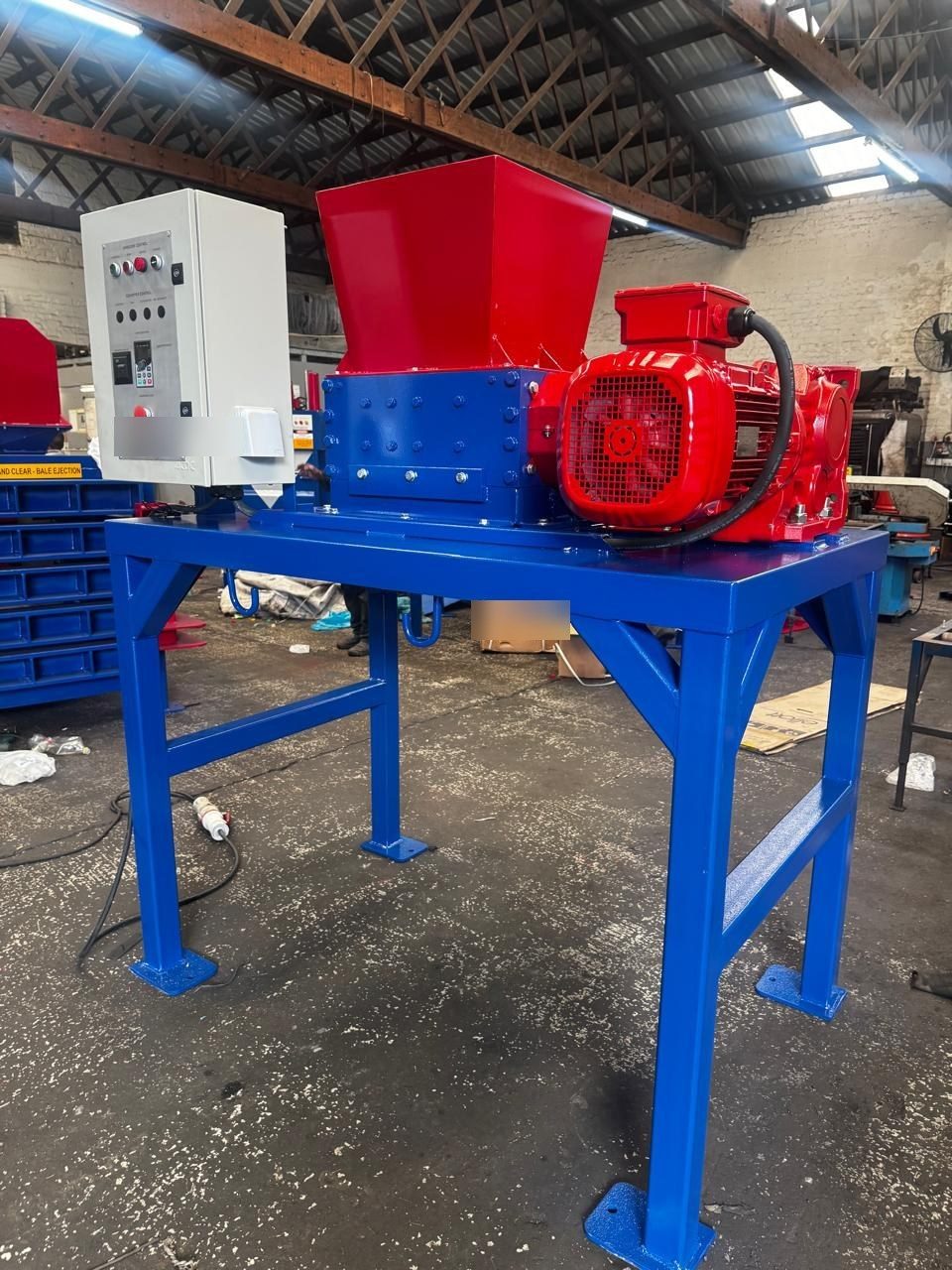
- 2 Sorting. Containers are sorted by polymer type and colour, then baled or shredded at the recycling facility.
- 3 Processing. The material is washed and processed into flakes or pellets.
- 4 New products. Recycled material is used only for approved, low-risk products that do not come into contact with food, children or animals, such as irrigation and cable-protection pipes, plastic poles, pallets, refuse bins and new pesticide containers.
- 5 Reporting. Volumes are recorded and reported to CropLife SA, which reports the national recovery and recycling figures to the Department of Forestry, Fisheries and the Environment (DFFE).
What proof does the farmer receive?
When you hand over your empty containers, the CropLife SA Certified Recycler gives you a CoDi Intel Declaration Document. It is your proof that the containers were handed over and disposed of correctly. Only Certified Recyclers can issue it.
5 years
Keep these documents for at least five years. They prove that you met your duty of care under the Waste Act. Auditors require them for GLOBALG.A.P., SIZA and other export and retailer audits, and inspectors may ask to see them.
Implications of non-compliance
Under the National Environmental Management: Waste Act, 2008, every person who generates waste has a “duty of care” to make sure it is stored, transported and disposed of safely and lawfully. Empty pesticide containers that are not properly decontaminated are hazardous waste. A waste generator who does not comply may face:
- criminal prosecution in terms of the Waste Act, which on conviction can lead to fines of up to R10 million and/or imprisonment of up to 10 years;
- compliance and enforcement notices from the Environmental Management Inspectors (“Green Scorpions”);
- liability for the cost of cleaning up contaminated land or water;
- loss of export market access and failed GLOBALG.A.P./retailer audits, because no proof of correct disposal can be shown;
- health risks to workers, families, communities and livestock, and reputational damage.
For your farm
What’s in it for you?
Pass your audits
Every hand-over comes with a CoDi Intel Declaration Document from the recycler, the proof auditors ask for at GLOBALG.A.P., SIZA and retailer audits.
Use every drop you paid for
The rinse water goes into the spray tank, so the product left inside the container ends up on your crop, not in the veld.
A safer farm
No containers lying in the field, and none taken home to carry water or food. Your workers, families and livestock are protected.
Peace of mind
You meet your duty of care under the Waste Act, with no risk of fines of up to R10 million or enforcement notices.
Ready to hand over your containers?
Find the CropLife SA Certified Recycler nearest to you.